

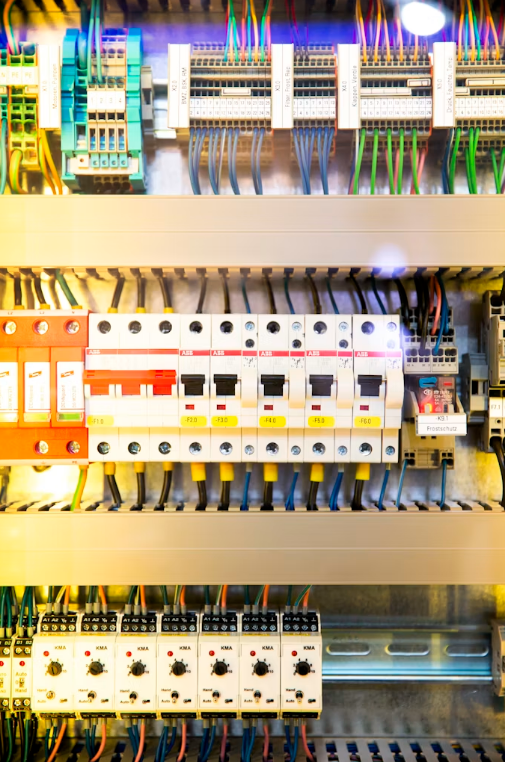
Quick Answer: Why Is Your Industrial Control Panel Failing?
The most common causes of industrial control panel failure are blown fuses, loose or overheated terminal connections, failing control transformers, worn contactors, overload conditions, and environmental contamination.
A control panel fuse that keeps blowing typically signals a downstream issue, such as an overload, short circuit, or ground fault downstream, rather than a defective fuse. While your team can safely document symptoms and error codes from outside the enclosure, any work inside a live panel requires a licensed industrial electrician equipped with proper lockout/tagout (LOTO) training and arc flash PPE. If you detect a burning smell or visible smoke, treat it as an emergency and clear the area immediately.
Why Control Panel Failures Are High-Stakes Events
Industrial control panels manage power distribution, signals, and automation sequences for motors, conveyors, HVAC systems, and process equipment. When a panel fails, the equipment it governs stops. In most production environments, the consequences of this unplanned downtime cost far more than the repair itself.
The urgency to restore power creates pressure to act quickly. However, control panels in industrial environments operate at voltages that present serious arc flash, shock, and fire hazards. This guide identifies the most common failure points, how to recognize them safely, and exactly when observation ends and professional industrial control panel repair begins.
Top 7 Industrial Control Panel Failure Points
| Failure point (from this article) | What to observe safely (from this article) |
|---|---|
| Blown fuses (and fuses that keeps blowing) | Note which fuse blew, its rating, and the equipment tied to that circuit. |
| Loose and overheated terminal connections | Look for hot spots at terminals, discolored wiring, melted insulation, and a “burnt electrical” smell near the panel. |
| Control transformer failure | Check if main supply indicators show voltage while control indicators (like the HMI screen) remain dark. |
| Contactor and relay wear | Listen for “contactor chatter” (rapid clicking/buzzing) caused by low coil voltage or unstable control wiring. |
| Overload and short-circuit conditions | Check external status indicators for an overload trip; if you suspect a short circuit (immediate tripping upon reset, arcing), stop and call a professional. |
| Environmental contamination and heat buildup | Check if external cooling fans are running and ensure ventilation filters are unobstructed. |
| Component end-of-life | (This section is explanatory on-page; no specific external observation is listed—leave as “component replacement schedule/cycle counts” context.) |
-
Blown Fuses (and Fuses That Keeps Blowing)
Blown fuses are the most visible and frequently misunderstood control panel failure mode. A fuse protects a circuit by interrupting current when it exceeds a safe level. When a fuse blows once, the cause may be a momentary overload. But if a control panel fuse keeps blowing after replacement, the fuse is simply doing its job since the underlying fault is still active.
Common Causes: A downstream short circuit, a ground fault, an overloaded circuit, or a failing motor drawing excessive inrush current.
What to Observe Safely: Note which fuse blew, its rating, and the equipment tied to that circuit. Do not blindly replace the fuse without identifying the root cause, as this risks further damage or a potential fire hazard.
-
Loose and Overheated Terminal Connections
Loose lugs, poorly torqued terminals, and oxidized conductors create resistance, which in turn creates heat. Thermal cycling, which is the repeated expansion and contraction of metal during normal operation, causes these connections to loosen naturally over time. Left unaddressed, this heat damages insulation and can ignite nearby combustible materials.
Common Causes: Vibration, thermal cycling, or improper initial torque.
What to Observe Safely: Look for hot spots at terminals, discolored wiring, or melted insulation. A “burnt electrical” smell near the panel is a massive red flag.
Safety Note: If you smell burning plastic, evacuate the area and contact an industrial electrician immediately.
-
Control Transformer Failure
The control transformer steps down the main supply voltage to the lower voltage used by PLCs, relays, and indicator lamps (typically 120V AC or 24V DC). When it fails, the panel loses all control functions. The equipment may appear to have main power, but it will be completely unresponsive.
Common Causes: Overloading the secondary winding by adding too many control devices, causing insulation breakdown.
What to Observe Safely: Check if the main supply indicators show voltage while the control indicators (like the HMI screen) remain dark.
-
Contactor and Relay Wear
Contactors electromagnetically switch motor power on and off. Every switching cycle produces a small arc that gradually erodes the contact material. Over thousands of cycles, this erosion increases resistance, causing contacts to weld closed (preventing stops) or fail to close (preventing starts).
Common Causes: High cycling, undervoltage conditions, or mechanical binding.
What to Observe Safely: Listen for “contactor chatter”, which is the rapid clicking or buzzing from inside the panel caused by low coil voltage or unstable control wiring.
-
Overload and Short-Circuit Conditions
Overloads protect motors from sustained overcurrent and overheating. A tripped overload relay stops the associated motor without taking down the rest of the panel. A short circuit is much more severe, causing an immediate, high-magnitude current surge that blows fuses instantly.
Common Causes: Mechanical binding, process jams, mis-sized overloads, or failing motor windings.
What to Observe Safely: Check external status indicators for an overload trip. If you suspect a short circuit (immediate tripping upon reset, arcing), stop and call a professional.
-
Environmental Contamination and Heat Buildup
Industrial control panels are rated to specific ingress protection (IP) levels that define their resistance to dust and moisture. Panels operating in environments beyond their rating accumulate contamination over time. Dust, oil mist, humidity, vibration, and high ambient temperatures all accelerate component failure when enclosures aren’t sealed or ventilated correctly.
Common Causes: Blocked ventilation paths, failed cooling fans, or compromised enclosure seals.
What to Observe Safely: Check if external cooling fans are running and ensure ventilation filters are unobstructed. Overheating devices can occur even at normal loads if airflow is restricted.
-
Component End-of-Life
Control panels contain components with defined service lives, including electrolytic capacitors in power supplies and drives, contactor coils rated to a number of operating cycles, and relay contacts rated to a switch count. Facilities that have not maintained a component replacement schedule against operating hours or cycle counts will encounter failures that appear random but are actually predictable.
What Your Team Can Safely Check First
Before calling for industrial control panel repair, your maintenance lead or facility manager can gather the following diagnostics without opening the enclosure:
- Document Error Codes: Screenshot or photograph any fault codes or alarms displayed on the HMI screen.
- Check Indicator Lamps: Note exactly which status lights are lit, dark, or flashing.
- Perform a Visual Check: Look at the exterior for burn marks, moisture, or damaged conduit entries.
- Verify Cooling: Ensure exterior cooling fans are running and vents are clear of dust.
- Review Recent Changes: Document any new machinery added, recent maintenance, or production spikes.
- Check Upstream Supply: Confirm if the main supply breaker feeding the panel is closed.
Do not open the enclosure, attempt to replace fuses, or perform internal visual inspections without proper LOTO procedures and arc flash PPE.
When to Stop and Call for Industrial Panel Emergency Repair Immediately
Not every issue is a minor fault. Contact a licensed emergency commercial electrician immediately if you observe:
- A burning smell is present anywhere near the panel enclosure
- Smoke, sparks, or visible arcing is occurring inside or outside the panel
- The panel enclosure or surrounding area feels hot to the touch
- A fuse or breaker trips immediately after replacement or reset with no change to load conditions
- Multiple zones or circuits fail simultaneously with no documented cause
- The panel has been exposed to moisture, flooding, or water intrusion
- Fault codes indicate arc flash or ground fault conditions
Need Help in Dallas, Southlake, Grapevine, or Colleyville?
If your DFW facility has a control panel fault that is taking equipment offline, call 940.464.3169 directly or submit your details online. To help us scope the repair and dispatch accurately, have the following ready:
- Panel Description: Type, manufacturer, age, and the systems it controls
- Fault Symptoms: Error codes, indicator status, what equipment stopped working, and when
- Recent Changes: Any new equipment, maintenance, or operational changes preceding the fault
- Facility Details: Address, access requirements, and whether the fault is causing active production loss
We serve Southlake, Grapevine, Colleyville, Dallas, and industrial and commercial facilities throughout the DFW Metroplex.
From First Call to Panel Back Online
Martin Electrical Systems’ motor control wiring and repair team handles industrial control panel repair with the field experience, tooling, and licensed personnel to begin diagnosis immediately upon arrival. Our technicians systematically isolate the root cause, and complete repairs with a documented account of findings and work performed.
Every hour of downtime has a measurable cost. Don’t wait for a recurring fault to cause secondary damage to your equipment.
Request an Estimate — Submit your panel details and our team will coordinate a site visit.
Request Emergency Industrial Control Panel Repair in Texas
Control panel faults that halt production are not maintenance items to schedule for next week. Every hour of downtime has a measurable cost, and the longer an active fault remains unaddressed, the greater the risk of secondary damage to connected equipment.
Martin Electrical Systems provides industrial control panel repair, emergency electrical diagnostics, and motor control services across the Dallas–Fort Worth Metroplex.
Request an Estimate — Submit your panel details and our team will follow up to coordinate a site visit.
Call 940.464.3169 to speak directly with our service team about your situation.
Once you contact us, a member of our service team reviews the details, coordinates the appropriate technician, and confirms response timing before dispatch.
⚠️ Safety Disclaimer: Industrial control panels operate at voltages and fault-current levels that present serious arc flash, electric shock, and fire hazards. All internal panel access, component replacement, fuse installation, terminal tightening, and electrical testing must be performed exclusively by licensed electricians following NFPA 70E requirements, proper Lockout/Tagout procedures, and using arc flash PPE rated for the calculated incident energy at the panel. If you detect a burning smell, see smoke, or observe any signs of arcing or overheating at a control panel, remove all personnel from the area and contact a licensed electrician before re-entry.
