

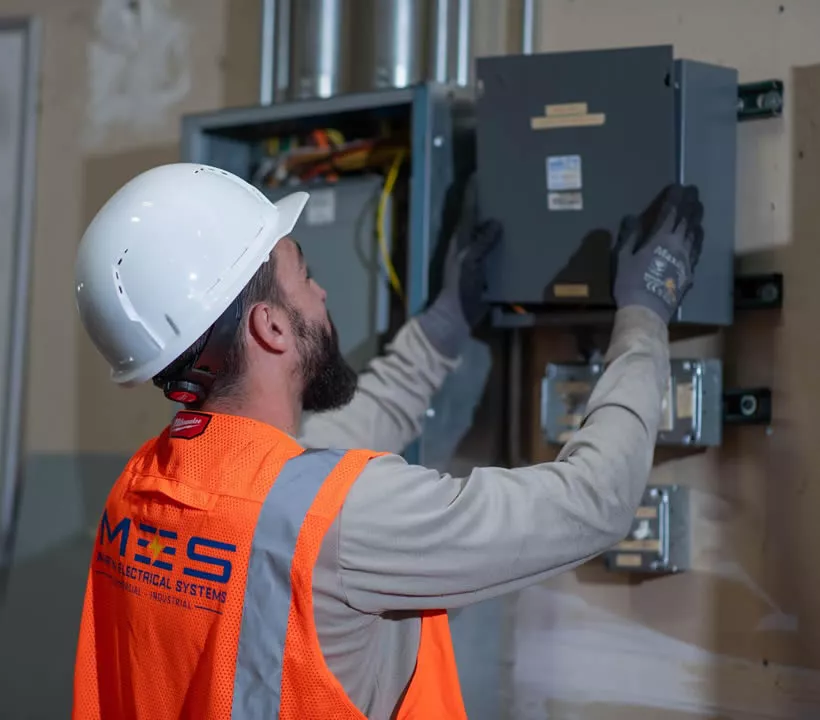
Power disruptions can slow down or stop your facility’s production. This becomes a problem when your entire line runs on continuous, automated clockwork. Even a brief disruption to industrial power and lighting can significantly affect output and compromise everyone’s safety.
The key to minimizing downtime is not just reacting quickly. You need a clear process to identify the real cause of the issue before you can restore power. This can help you minimize downtime as quickly and safely as possible.
Step 1: Make Sure Your Facility Is Safe
Before anyone starts poking around inside a panel, prioritize everyone’s safety. Shut things down properly. Test to make sure it’s actually de-energized. Only qualified professionals should be handling electrical systems to avoid any risks.
Taking extra precautions can prevent workplace injuries or major incidents that can result in liabilities. It can also prevent equipment damage that can require costly repairs or replacements.
Step 2: Determine the Scope of the Issue
Start by identifying the problem’s extent:
- Is only one machine affected, or is an entire production line affected?
- Are multiple panels involved?
- Is lighting out in one section or across the building?
- Did the issue begin after equipment was added or modified?
Understanding the scope helps narrow down whether the problem is local to a specific piece of equipment or part of a larger distribution issue.
Step 3: Check the Basics
Many industrial power problems stem from simple causes:
- Tripped breakers
- Blown fuses
- Overloaded circuits
- Loose terminations
- Activated emergency stops
If a breaker has tripped, avoid resetting it without investigating the reason. The trip is often a sign of overload, short circuit, or equipment failure. Resetting without understanding and addressing the cause can lead to repeated issues.
Step 4: Inspect Distribution Equipment
If the issue is not immediately clear, move upstream through the power distribution system. Check these parts of your equipment for signs of overheating, unusual noise, or discoloration:
- Distribution panels
- Switchgear
- Motor control centers
- Transformers
Thermal imaging can help identify hot spots that are not visible during a standard inspection. Voltage and phase testing can also reveal imbalances that may be impacting motors or lighting systems.
Step 5: Evaluate Connected Equipment
In some cases, the electrical system is functioning properly, but the connected equipment is not. You should inspect motors, control components, and wiring for signs of mechanical failure or worn parts.
Equipment that draws more current than expected can cause protective devices to trip, resulting in recurring disruptions. Understanding load conditions is critical when troubleshooting industrial power and lighting systems.
Step 6: Review Recent Changes
Electrical problems can appear after making modifications. Consider whether these have occurred recently:
- Installed new equipment
- Reconfigured panels
- Increased production to meet increased demand
- Completed maintenance that made changes to your existing system
Even small changes can affect load balance or introduce wiring errors. Reviewing recent updates can often shorten troubleshooting time.
Step 7: Restore and Monitor
After identifying and correcting the issue, restore power carefully and monitor performance. Confirm stable voltage readings, normal current draw, and consistent lighting levels. Continued monitoring helps ensure the issue is fully resolved and supports long-term efforts to minimize downtime.
Need Help Minimizing Downtime?
Power interruptions in industrial environments impact productivity, equipment lifespan, and overall profitability. Having a clear troubleshooting process in place helps your team respond efficiently and reduce the impact of downtime.
When your industrial power and lighting systems are routinely inspected and properly managed, unexpected failures become far less common. At Martin Electrical Systems, we help industrial facilities identify vulnerabilities and strengthen system reliability against electrical issues.
If you’re experiencing recurring electrical disruptions or want to improve the performance of your industrial power systems, contact us today to schedule a consultation and keep your operations running without interruption.
