

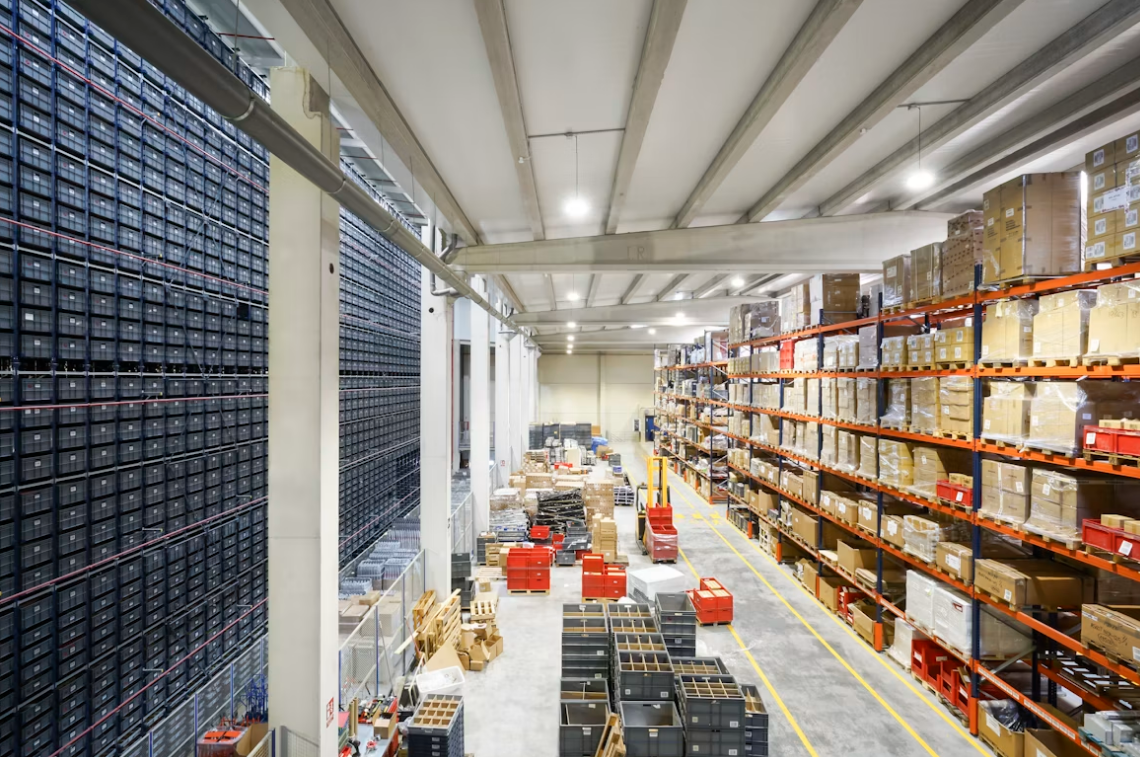
Warehouse lighting is often inefficient in real-world conditions, with lights left on in empty zones, uneven visibility across aisles, and energy wasted in areas that don’t need full output. A well-designed warehouse lighting layout combined with the right lighting controls, such as occupancy sensors and lighting daylight controls, aligns lighting with actual facility use across aisles, docks, and mezzanines.
In this article, we’ll walk through practical control strategies by zone, how occupancy and daylight sensors perform in warehouse environments, and what factors drive ROI, including hours of use, mounting height, and layout.
Why Layout and Controls Belong in the Same Conversation
Warehouses aren’t uniform spaces. A picking aisle with tall racking has different lighting needs than a dock door area with strong daylight swings, and both are different from a mezzanine where workers move in and out all day.
That’s why controls shouldn’t be treated as an add-on. If your zoning doesn’t match your layout, you can end up with the two most common outcomes: lights staying on because the zone is too big to ever go vacant, or lights turning off or dimming at the wrong time because sensors can’t reliably “see” the work being done.
The best projects start by defining how each area should look and feel operationally, then applying control logic to reduce wasted runtime without creating new frustration.
Warehouse Lighting Layout by Zone (Aisles, Docks, Mezzanines)
A strong warehouse lighting layout starts by defining what each zone needs to support day-to-day operations.
Aisles
In aisles, the goal is usually consistent illumination where it matters most: on the rack faces and at working height. Shadowing and uneven light are common complaints in narrow aisles, especially when fixtures are spaced for average coverage instead of the actual rack geometry.
Docks
At docks, the layout has to account for frequent transitions, such as open doors, trailers, outdoor brightness, and staging areas that can change configuration. If lighting isn’t designed to handle these transitions, visibility can feel worse even if the fixtures are technically “brighter.”
Mezzanines
On mezzanines, mounting heights are often lower, the environment is tighter, and people may be moving between levels frequently. Here, glare control and uniformity often matter as much as raw output.
The key point is that layout determines performance. Although controls can improve efficiency, they can’t correct poor coverage or fix lighting that was never positioned correctly for the space.
Warehouse Lighting Controls in Aisles – Lighting Occupancy Sensors That Don’t Disrupt Picking
Aisles are one of the best places to use warehouse lighting controls because traffic is rarely constant. Many aisles sit empty, then become active in bursts, making occupancy sensors especially effective.
Aisle performance depends on how well sensors are tuned to actual movement patterns. Poorly positioned or selected sensors can lead to delayed response, dead zones, or lights dimming while someone is still working in a bay.
The objective isn’t aggressive shutoff, but predictable lighting that returns to full output quickly when activity starts, and saves energy when the aisle is genuinely vacant.
A well-set aisle strategy usually includes thoughtful zoning (so activity in one aisle doesn’t keep an entire row bright) and conservative minimum light levels where safety or continuous visibility is required.
Dock Doors and Perimeter Bays – Lighting Daylight Controls That Feel Stable
Dock areas are where lighting daylight controls can shine, because natural light often provides significant illumination for large portions of the day. The risk is overcorrection: controls that chase every cloud or direct sun angle can create noticeable swings that annoy operators and reduce perceived safety.
The practical approach is to treat daylight control as a smoothing tool, rather than a constant adjustment. When sensors are located properly (measuring ambient daylight rather than direct glare), fixtures can dim gradually and maintain a consistent target light level. This reduces wasted runtime while still keeping docks and staging areas visibly ready, even as exterior conditions change.
Daylight control tends to produce the strongest ROI in facilities with multiple dock doors, skylights, translucent wall panels, or long perimeter runs that receive reliable daylight.
Mezzanines and Support Areas – Combining Lighting Occupancy Sensors and Daylight Controls
Mezzanines, stairwells, storage rooms, and maintenance corridors are often perfect candidates for lighting occupancy sensors because they’re used intermittently. In some facilities, lighting daylight controls also help if these areas receive a significant amount of natural light through windows, clerestory panels, or skylights.
This is also where controls are most effective when properly configured: lights respond quickly when someone enters, then step down smoothly after the area is empty without requiring anyone to think about switches or timers.
The operational payoff is less wasted runtime and fewer instances of lights left on in inactive areas, especially in mixed-use warehouse environments.
What Determines Practical ROI (Beyond Fixture Efficiency)
Two warehouses can install similar equipment and see very different results. Practical ROI is driven by a few realities that show up in nearly every project:
- Hours of Use: Controls pay back faster where lights currently run long hours at full output, especially multi-shift operations.
- Mounting Height: Height impacts fixture selection and sensor coverage; what works at 15 feet may not behave the same at 35 feet.
- Layout and Zoning: Zoning that mirrors how people and forklifts actually move is where savings become real.
- Daylight Availability: Daylight controls only help when daylight is consistent enough to meaningfully replace electric light.
- Commissioning: This is often what turns controls from something people have to manage into something they barely notice.
The best ROI doesn’t come from a single device choice. It comes from matching layout and control logic to the building and the workflow, and then taking the time to ensure it’s properly set up.
Common Reasons Warehouse Controls Underperform
Most problems trace back to planning and setup rather than the controls itself. Warehouses are challenging environments: racking can block sensor view, traffic patterns change seasonally, and dock doors create extreme daylight shifts.
If sensors aren’t aimed and commissioned for the real conditions, results can be inconsistent. The good news is that these issues are usually solvable with correct zoning, placement adjustments, and realistic time delays, especially when commissioning is treated as part of the project rather than an afterthought.
Better Lighting That Works With Your Warehouse, Not Against It
Modern warehouse lighting layouts should create consistent visibility where work happens, reduce nuisance complaints, and cut waste where light doesn’t need to run at full output all day. When warehouse lighting controls are designed by zone and tuned to actual operations, lighting occupancy sensors and lighting daylight controls can deliver savings without sacrificing safety or productivity.
At Martin Electrical Systems, we perform a lighting audit and provide an estimate based on your zones, mounting heights, operating hours, and daylight conditions. We then recommend a control approach that targets practical ROI and a better day-to-day experience on the floor.
If you’re considering an upgrade, the fastest next step is a walkthrough and a short control strategy plan tailored to how your facility actually runs. Contact our team of professionals to review your lighting controls setup and ensure your system is properly zoned, commissioned, and optimized for real warehouse conditions.
